
Nutrition 101
Ever find yourself wondering what the heck you’re eating, or what everyone is talking about when throwing around terms like soluble fiber and saturated fats?
We often categorize food into fruits and veggies, grains/carbs, and protein. The Harvard Healthy Eating Plate and USDA My Plate (which replaced the Food Pyramid) use this classification in their visuals.
But then we talk about counting macros, getting enough protein, fiber being the new protein, good fats and bad fats, etc, etc.
How do these line up? Is butter a carb? Even Regina George has been there.

This post aims to explain the big blocks, highlight their importance, and classify foods you’re probably already eating. My hope is you come away feeling more empowered in your choices when it comes to building your plate and a well rounded, nutritious diet.
Definitions
MACRONUTRIENTS: Make up the bulk of the diet and supply energy and other essential nutrients. Include carbohydrates, proteins, and fats. Commonly referred to as “macros”.
MICRONUTRIENTS: Vitamins (water and fat soluble) and minerals (macro and trace) that are critical for health, but needed in smaller amounts than macronutrients. You likely recognize these by name: vitamin C, or iron, for example.
VITAMINS: Necessary for various functions in the body, such as creating red blood cells, preventing cell damage, supporting vision and the immune system, for example. Water soluble vitamins dissolve in water and excess is flushed out of the body. Fat soluble vitamins don’t dissolve in water and are stored in fatty tissues of the liver for use at another time. Often called by their letter name, like vitamin C or A.
MINERALS: Critical for body functions, like controlling blood pressure, maintaining muscle, and healing wounds. There are two types - macrominerals and trace minerals, and they are required in different amounts. These are referred to by name, for example, magnesium and zinc.
Let’s take a closer look at the macros as a basis for building your plate.
Carbohydrates
Carbohydrates are our main energy source for both autonomous functions (breathing, cellular functions) as well as walking, moving, and exercise. Getting enough carbs regularly is necessary for sustained energy.
Fiber, starch, and sugar are the three types of carbohydrates. Foods contain these in various amounts and combinations, and you may have heard them referred to as “simple” or “complex carbs”. This refers to the process and speed of digestion. Put simply, fiber and starch are complex and sugars are simple carbs.
Carbs are found in a wide array of foods, not just breads and pastries. Many carbohydrate-rich foods are good sources of other vital nutrients, such as vitamins C and E, and magnesium, according to Harvard Health.
The quality of carbohydrates is important because of HOW they are absorbed during digestion and WHAT else they may contain or lack. Slower absorbing carbohydrates (like brown rice vs white rice) lead to less cravings, more sustained energy, and better blood sugar balance.
HEALTHY FOOD SOURCES: Whole grains such as brown rice, quinoa, oatmeal, whole grain breads; legumes, vegetables, fruits.
FOOD SOURCES TO REDUCE: Highly processed and refined foods like white bread, sugary cereals, pastries; soda or sweetened drinks, and candy.
Protein
Protein is a building block for pretty much every body tissue or body part, not just muscles. It is responsible for structuring and maintaining tissues as well as other functions, like creating enzymes that supply oxygen to the blood, and more.
Protein is composed of 20 “building blocks” called amino acids. Some of these amino acids can be made by the body, but nine must come from food and so are referred to as essential amino acids.
Just like with carbohydrates, quality of protein sources is important, because of what else is or is not in that food - fiber, vitamins, minerals, and fats. Additionally, a variety of protein sources is important to make sure your diet includes sources of all nine essential amino acids.
HEALTHY FOOD SOURCES: Animal sources: meat, poultry, seafood, eggs, milk and cheese; plant sources: soy, beans, nuts, seeds, many grains.
FOOD SOURCES TO REDUCE: Highly processed options such as processed meats, some protein supplements and bars should be consumed in moderation due to added ingredients.
Fats
Fats are oils in food. They supply energy and build cells, and help the body absorb fat soluble vitamins (like A, D, and E). Like protein, there are essential fatty acids that must be obtained from food: omega 3 and omega 6. Getting enough fat through the diet is essential for this reason.
Fats can be broken down into three categories: unsaturated fats, saturated fats, and trans fat. You can think of them as good, ok, and bad, respectively.
Quality is important here, too. In addition to supplying the body with essential nutrients, fats can hurt or help cholesterol levels and therefore influence cardiovascular disease risk. Cholesterol is measured in a ratio of good (HDL) to bad (LDL), and unsaturated fats from dietary sources are a good way to tip the scale in favor of good cholesterol.
HEALTHY FOOD SOURCES: Plant oils like olive oil, avocado, nuts such as almonds, brazil nuts and walnuts, seeds, fish such as salmon, tuna, and herring.
FOOD SOURCES TO REDUCE: Saturated fats should be consumed in moderation: red meat, butter, cheese, coconut oil, cream, and some processed foods are high in saturated fat. It’s important to seriously reduce trans fat but it / hydrogenated oil in food has been largely eliminated in the US.
Fiber*
* fiber is not a macronutrient but included here as a separate call out due to importance and prevalence in conversation these days
Fiber is a type of carbohydrate, and it exists in different amounts and types depending on the food it’s found in. Unlike sugars, starches, fats and proteins, fiber is not absorbed by the body and instead passes through the digestive system. There are two types, soluble and insoluble, which serve different purposes in digestion, blood sugar regulation, and heart health.
Fiber has become a more and more important part of the nutrition conversation since many Americans do not meet their dietary recommendations for fiber, and its benefits are crucial for healthy living.
It’s mainly found in plant foods, and there are many, many choices. Prioritizing carbohydrates with high fiber content is a good strategy for digestive health and general well-being.
HEALTHY FOOD SOURCES: Whole grains like oatmeal and quinoa, whole fruits and vegetables with edible skins like apples and blueberries, legumes such as beans and lentils, nuts, leafy greens like kale.
FOOD SOURCES TO REDUCE: Be mindful of fiber supplements - they are not meant to fully replace food or dietary sources of fiber, but can be helpful when it’s difficult to meet fiber requirements through diet alone (or when recommended by a doctor).
How Much?
When it comes to how much of each component you should be eating, the conversation gets more personal. Your recommendations are based on age, weight, activity level, and more. They can change based on your health goals.
A general guideline for daily calories is:
Carbs: 45-65%
Fats: 20-35%
Protein: 10-35%
The USDA offers a Dietary Reference Intake (DRI) calculator you can use to get a sense of your daily needs and there are several others you can find online.
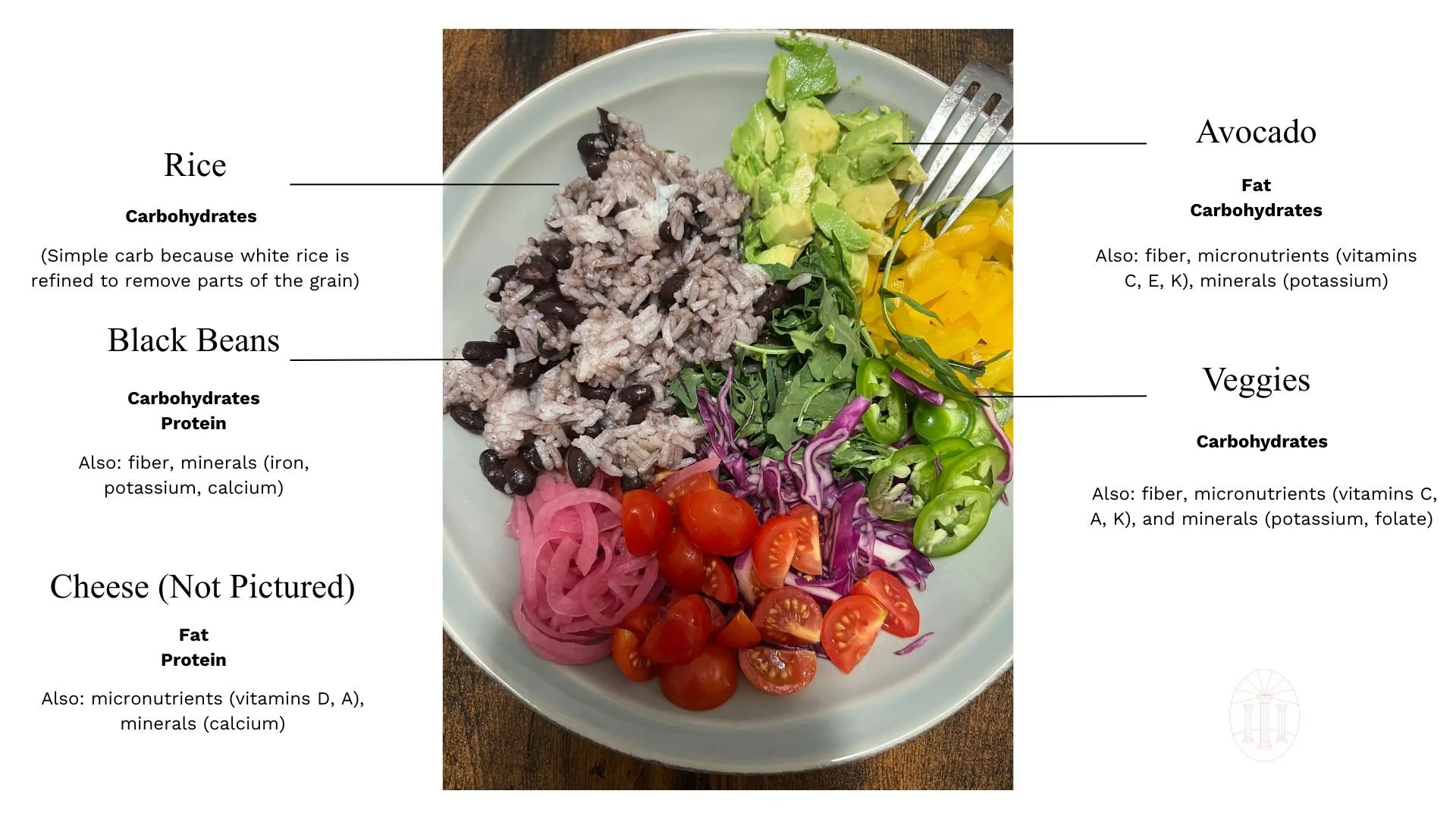
Examples From My Camera Roll
Burrito Bowl
Pasta Salad

If you found this helpful, please share with a friend!
What other questions about macros or nutrition do you still have?
🍎
If you’re curious about food, building your plate, wondering how you could eat better, or not sure where to start when it comes to food, coaching may help you get clarity and make changes that actually stick.
Send me a note and we can discuss which resources would work best for you.
